


Choose language:
EPISODE 2 Amplified hatred
Hate on the internet doesn’t amplify itself. Behind the harassment campaigns, threats, and attacks against women who participate in public debate are people who organize them and platforms whose design facilitates the circulation of violent content and hate speech. Gender-based violence facilitated by technology takes many forms, from coordinated harassment to the creation and dissemination of sexual deepfakes using artificial intelligence. These attacks seek to intimidate, discredit, and silence women and LGBTQIA+ people, restricting their freedom of expression and their participation in digital spaces.
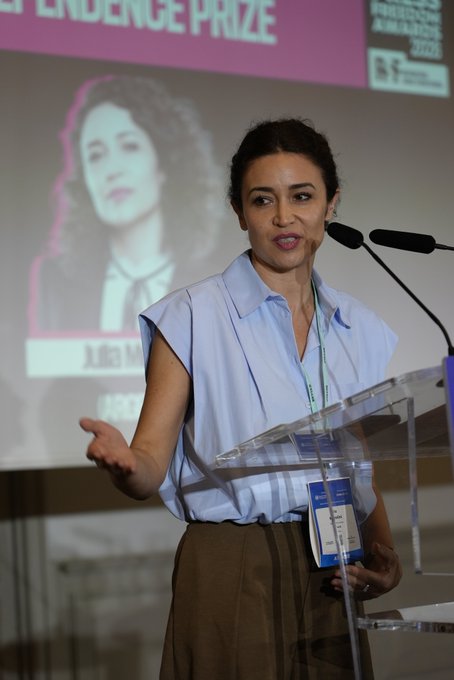
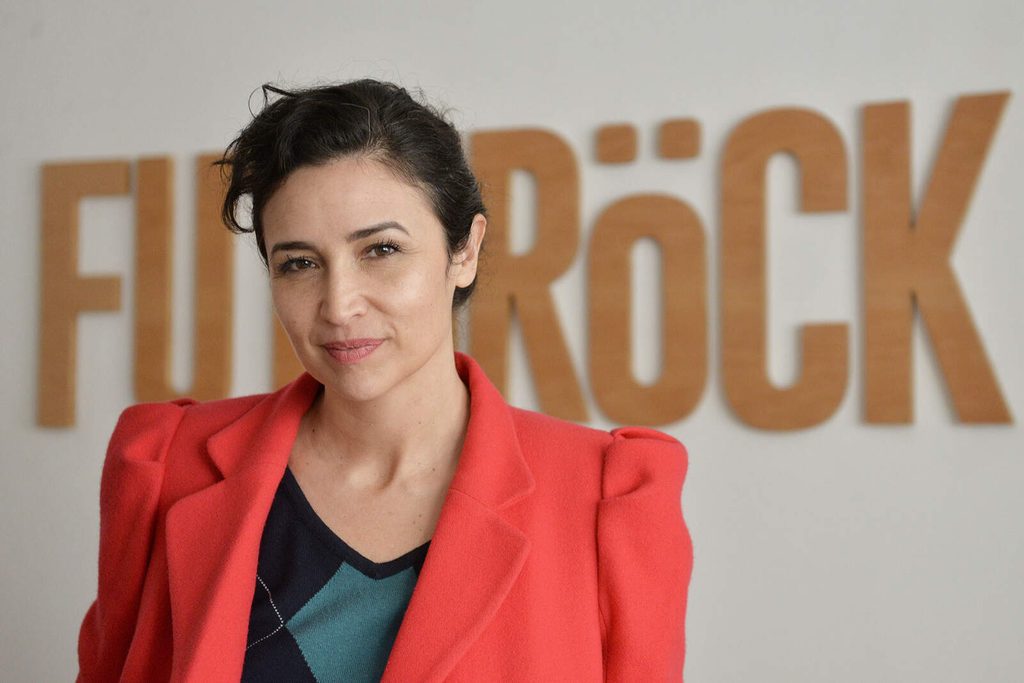
In Amplified Hatred, we learn the story of Julia Mengolini, an Argentine journalist, feminist, and founder of Futurock, who has been facing digital harassment campaigns for over a decade. In 2025, fake videos created with artificial intelligence involving her family began circulating, accompanied by threats and even amplified by President Javier Milei. Julia decided to take the case to court, opening a discussion about the responsibility of online platforms, the use of these technologies to perpetrate violence, and women’s right to express themselves freely and participate in digital spaces.
But Julia’s story doesn’t end with the attacks. Her decision to seek legal recourse, supported by her community, demonstrates that there are also forms of resistance and collective organization in the face of digital violence. In Latin America, feminist organizations, support networks, and helplines offer psychological support, legal guidance, and digital security assistance to those who face these aggressions. These efforts aim to ensure that no woman or LGBTQIA+ person has to abandon digital spaces out of fear and that the responsibility for confronting this violence doesn’t fall solely on those who suffer it. Demanding accountability from the platforms, protection and reparations from governments, and strengthening these support networks are all part of building an internet where everyone can express themselves and participate freely.
Listen to this episode!



Find out more about this story
- “A Simple and Brutal Objective,” ESSAY by Julia Mengolini in Revista Anfibia (2026)
- SOS Digital Center (Fundación Internet Bolivia), official website
- “Deepfakes against Julia Mengolini in Argentina: RSF acts as amicus curiae in this legal case and warns about the escalation of online sexist violence,” Reporters Without Borders (2026)
- “Argentine journalist Julia Mengolini expects to face President Milei in court after a deepfake pornography harassment scandal,” Analysis by the Committee to Protect Journalists (CPJ) (2026)
- “The courts recognized that Julia Mengolini was a victim of digital gender-based violence and that this impacted her freedom of expression,” Post by Amnesty International Argentina (2026)
- “Deepfakes, AI, and Digital Violence: What They’re Doing to Julia Mengolini Is Violence,” POST by DataGénero (2025)
- “Organized Gender Hate: The Right’s Digital Offensive Against Female Journalists in Argentina,” NEWSPAPER ARTICLE by Feminacida (2025)
Explore our research on technology-facilitated gender-based violence
- REPORT “Lines of Help for Addressing Cases of Online Gender-Based Violence: Monitoring and Trends in Bolivia, Brazil, and Ecuador” (2024)
- “Deepfakes: When Technologies Promote Digital Gender-Based Violence,” ANALYSIS COLUMN (2025)
- GUIDE “Guiding Principles for Legislative and Public Policy Reform on Gender-Based Violence Facilitated by Technology: Towards a System of Accountability,” Derechos Digitales and UNFPA (2025)
- DOCUMENT “Combating Technology-Facilitated Gender-Based Violence (TGBV) from the Perspective of International Human Rights Law,” Digital Rights and UNFPA (2025)
- “Between Bodies and Codes: New Media, Old Forms of Violence,” ANALYSIS COLUMN by Marina Meira (2025)
Interviews in this episode
Marina Meira

Marina works as a Policy Coordinator for Derechos Digitales. She is a lawyer with a master’s degree in scientific and cultural communication. She has extensive experience in research, advocacy, and strategic litigation in both civil society organizations and the public sector.
Lu An Mendez

Lu An is a Bolivian psychologist specializing in gender-based digital violence. For the past seven years, she has worked in digital rights with a gender perspective. This approach guides her work as a coordinator of research, monitoring, and advocacy projects on online violence in Bolivia. She currently coordinates the Digital SOS Center at the Fundación Internet Bolivia.
Credits
Narration and executive production: Tomás Vizzón
Script: María Florencia Alcaraz
Production: India Molina, Catalina Balla, Nicole Solano and Gastón Wahnish
Research and interviews: India Molina and María Florencia Alcaraz
Sound design: Mateo Corrá
Art and design: Diego Lepián
Administration: Ana Laura Fortuzzi, Camila Lobato and Paula Jaramillo
Supervision: Catalina Balla y Gastón Wahnish
Co-executive directors of Derechos Digitales: Jamila Venturini and Juan Carlos Lara
This podcast was produced with the support of Luminate.
This publication was created by a Spanish-speaking team at Derechos Digitales and translated into English with AI assistance, ensuring accuracy and consistency through human review.