


Choose language:
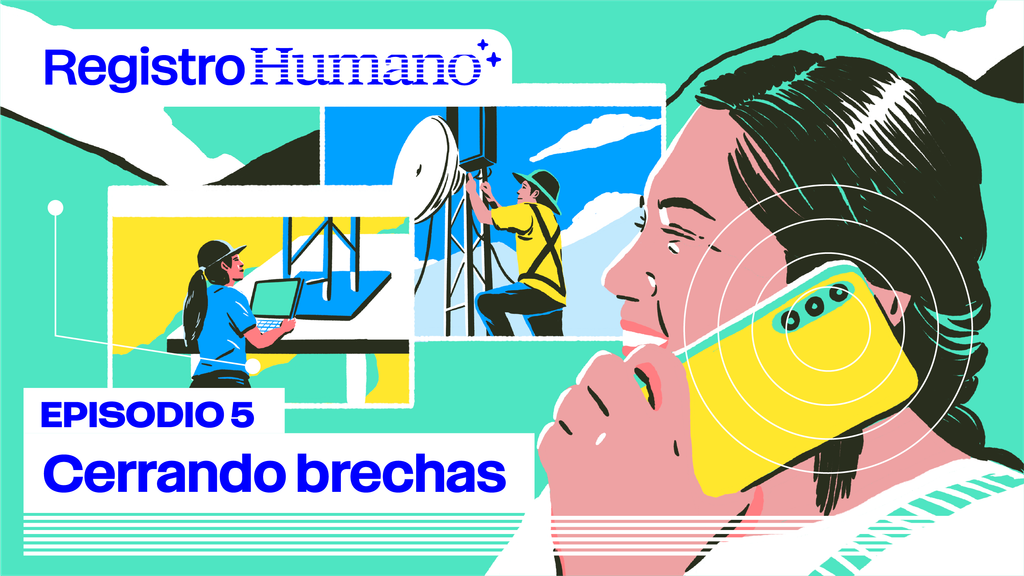
EPISODE 5 Bridging the gap
For millions of people in Latin America, connecting to the internet remains difficult, expensive, or simply impossible. In many rural and Indigenous communities, large telecommunications companies don’t operate because they consider installing infrastructure unprofitable. But access to meaningful, high-quality, affordable connectivity that meets people’s needs is fundamental to exercising human rights. It’s not enough to simply have a signal: how we connect, what we use it for, and who makes the decisions about the technologies we use also matter.
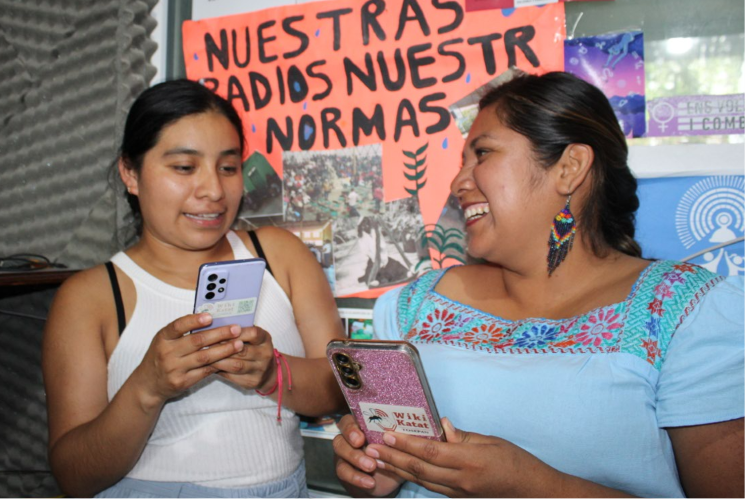
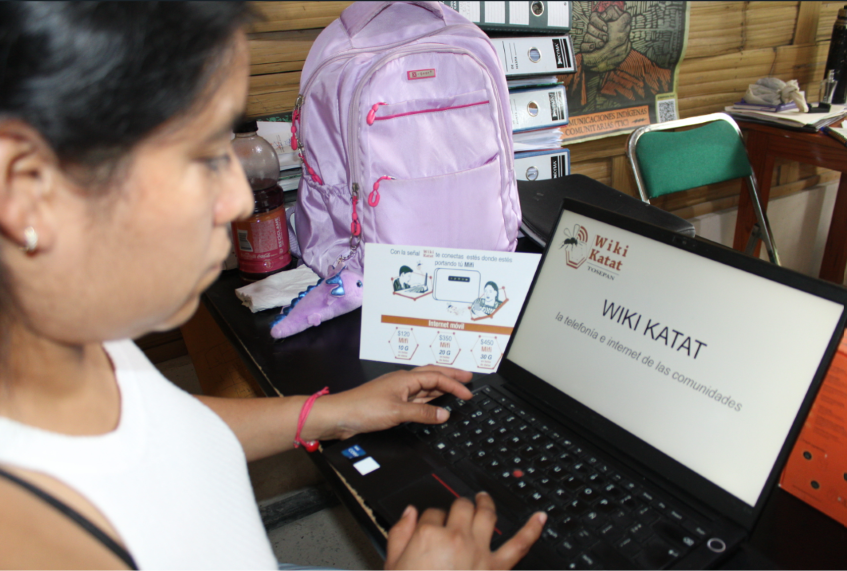
In “Closing Gaps,” we travel to the Sierra Nororiental region of Puebla, Mexico, to learn the story of Wiki Katat Tosepan, a telephone and internet project created and managed by Indigenous communities. With Nicasia Lino de Jesús, known as Niki, a radio broadcaster and land rights advocate, we discover how a group of women and young people from the Tosepan cooperative decided to confront connectivity barriers with their own alternative. Today, they offer services at affordable prices, support in Indigenous languages, and a model in which a portion of the revenue is reinvested in community projects, from the local radio station to educational and cultural activities.
Here we see that communities don’t have to wait for large corporations to connect them. Through organization and partnerships, they can build alternatives that meet their needs and strengthen their technological autonomy. To achieve this, it’s also necessary for governments to promote public policies that support community networks and guarantee internet access in historically excluded territories. Talking about meaningful connectivity means talking about rights, dignity, and the ability to decide how we inhabit the digital world.
Press play to travel to Mexico with us!
Find out more about this story
- “Closing the gaps: Wiki Katat, Mexico’s first social and community-based mobile virtual network operator,” LACNIC RESEARCH (2023)
- WIKI KATAT Cooperative, official website
- Local Networks (LocNet) PROJECT, an initiative of APC and Rhizomatica in conjunction with grassroots communities and support organizations in Africa, Asia, and Latin America and the Caribbean.
- Sursiendo, communication and digital culture, official website
- “Our Radios, Our Standards: A Path Towards Technological Autonomy,” APC Network CONVERSATIONS (2024)
- “Other Possible Digital Horizons,” Newspaper Article from Comunicares (2025)
- “The Indigenous Community That Wants to Provide Mobile Phone and Internet Service to All of Mexico,” Newspaper Article from El País (2025)
- “Wiki Katat: The Dream of Community Telecommunications Taking Root in the Northeastern Sierra of Puebla,” Newspaper Article by Desinformémonos (2023)
Explore our research on connectivity and the digital gap
- RESEARCH “Recommendations to Combat the Digital Divide (Amazon)” (2024)
- “The Latin American Free Software Installation Festival Turns 20 and the Challenges Are Renewed,” ANALYSIS COLUMN by María Encalada (2025)
- RESEARCH “Contribution to the open consultation of the ITU Council Working Group on the Internet regarding meaningful connectivity in landlocked developing countries,” Derechos Digitales and TEDIC (2025)
- “Contribution to the consultation on community networks convened by the Undersecretariat of Telecommunications in Chile,” DOCUMENT (2025)
- “Connectivity in emergencies: Chile, Venezuela, and Brazil, and the Lessons They Leave Behind,” ANALYSIS COLUMN (2026)
Interviews in this episode
María Encalada

María is a Tech Analyst at Derechos Digitales. She holds a degree in Systems Engineering from the National University of Loja and is a free software activist. María is part of technology communities in Ecuador, where she has led training processes with a gender and community focus.
Jes Ciacci
Jes is the co-founder and current coordinator of the Mexican organization Sursiendo. She is also the Membership Coordinator for May First. She has participated in various national and international forums promoting critical digital technology. She provides digital care support using free software to social and land defense organizations.
Credits
Narration and executive production: Tomás Vizzón
Script: María Florencia Alcaraz
Production: India Molina, Catalina Balla, Nicole Solano and Gastón Wahnish
Research and interviews: India Molina and María Florencia Alcaraz
Sound design: Mateo Corrá
Art and design: Diego Lepián
Administration: Ana Laura Fortuzzi, Camila Lobato and Paula Jaramillo
Supervision: Catalina Balla y Gastón Wahnish
Co-executive directors of Derechos Digitales: Jamila Venturini and Juan Carlos Lara
We appreciate the support of Catalina Trejos Sánchez, from the LocNet Project of Rhizomática and APC, in the production of this episode.
This podcast was produced with the support of Luminate.
This publication was created by a Spanish-speaking team at Derechos Digitales and translated into English with AI assistance, ensuring accuracy and consistency through human review.